
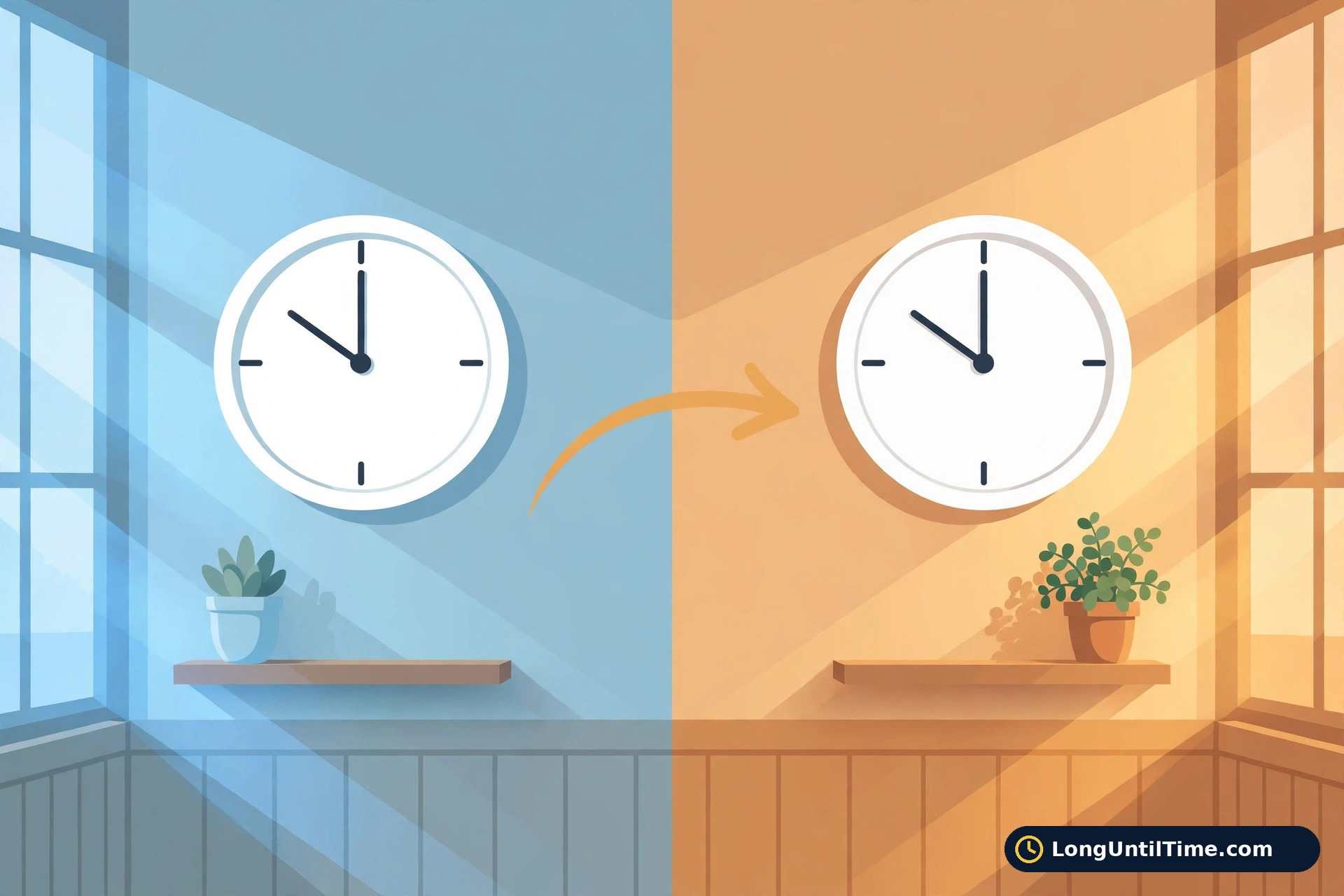
What Time Is 10 Hours From Now? A Simple Way to Add 10 Hours to Any Time
If you are asking what time is 10 hours from now, the short answer is that it depends on your current time: take the time in your local time right now, add 10 hours, and check whether the count flips AM and PM or carries you past midnight. At 9:00 AM, for instance, 10 hours from now is 7:00 PM today. At 9:00 PM, it is 7:00 AM tomorrow. The arithmetic is easy; the two things that trip people up are the AM/PM label and the date.
This guide gives you three ways to get the answer: a quick reference table for the times people check most often, a step-by-step method for any starting time, and a mental shortcut for when no calculator is handy. You will also see why the result sometimes lands on the next date, how it changes across time zones, and where a 10-hour jump actually matters.
Quick Reference: The Time 10 Hours From Now
If your starting time is a round hour, you may not need to calculate anything at all. Find it in the left column and read across:
| Current Time | Time in 10 Hours |
|---|---|
| 12:00 AM | 10:00 AM |
| 2:00 AM | 12:00 PM |
| 4:00 AM | 2:00 PM |
| 6:00 AM | 4:00 PM |
| 8:00 AM | 6:00 PM |
| 10:00 AM | 8:00 PM |
| 12:00 PM | 10:00 PM |
| 2:00 PM | 12:00 AM (next day) |
| 4:00 PM | 2:00 AM (next day) |
| 6:00 PM | 4:00 AM (next day) |
| 8:00 PM | 6:00 AM (next day) |
| 10:00 PM | 8:00 AM (next day) |
| 11:30 PM | 9:30 AM (next day) |
Two patterns stand out. First, the minutes never change when you add whole hours, which is why 11:30 PM lands on 9:30 AM. Second, the “(next day)” rows begin at 2:00 PM, the first starting time whose count runs past midnight. It also helps to feel the size of the jump: 10 hours is 600 minutes, or 36,000 seconds, a little under half a day. A time calculator simply performs this same addition with your exact starting time.
Why Adding 10 Hours Flips AM to PM (and When It Does Not)

This is the part that causes nearly every wrong answer. A clock face is split into two 12-hour halves, AM and PM, and a 10-hour jump is almost long enough to carry you into the opposite half. Starting from most hours, the count crosses one boundary, either noon or midnight, so the label flips: 8:00 AM becomes 6:00 PM, and 8:00 PM becomes 6:00 AM. Forget the flip and you end up 12 hours out, planning for the wrong half of the day entirely.
There is one exception cluster worth knowing. If your start time is in the 12s or the 1s, such as 12:30 PM or 1:00 AM, the count of 10 hours stays inside the same half of the clock, so the label does not change: 1:00 AM plus 10 hours is 11:00 AM, and 12:00 PM plus 10 hours is 10:00 PM. Every other starting hour flips the label exactly once. The related trap is the date change: once your start time reaches 2:00 PM, the answer falls after midnight, so it belongs to the next calendar date even though the whole calculation began today. If counting forward to that midnight boundary is the question you actually need answered, our companion guide on how long until 12 AM works the problem from the other direction.
There is also a shortcut hidden in the pattern. Adding 10 hours gives the same clock reading as going 2 hours backward with the AM/PM label swapped. From 5:30 PM, step back 2 hours to 3:30, swap PM for AM, and you get 3:30 AM, which is exactly right. It works because 10 hours forward plus 2 hours backward completes the full 12-hour cycle.
How to Calculate 10 Hours From Now
The reliable method has three moves. Add 10 to the hour, keep the minutes exactly as they are, then fix the label and the date: if the new hour passes 12, subtract 12 and flip AM to PM or PM to AM, and if the count carried you past midnight, move the date forward by one day. If your gap happens to be twelve hours rather than ten, the companion piece on 12 hours from now applies the identical steps. Here are four worked examples, one for each situation you are likely to meet.
Example 1: A Straightforward Morning (9:20 AM)
Add 10 to the hour: 9 + 10 = 19, and 19 minus 12 is 7, with AM flipped to PM. The minutes stay at 20. So 10 hours from 9:20 AM is 7:20 PM on the same day, with no date change to worry about.
Example 2: Crossing Midnight (5:30 PM)
Count to midnight first: from 5:30 PM to 12:00 AM is 6 hours 30 minutes. That leaves 3 hours 30 minutes of the 10 still to add, which takes you to 3:30 AM the next day. Splitting the count at midnight is the safest way to handle any evening start.
Example 3: The Total-Minutes Method (4:45 PM)
When the starting time has awkward minutes, convert everything to minutes and let the subtraction do the work. In 24-hour terms 4:45 PM is 16:45, which is 16 × 60 + 45 = 1,005 minutes since midnight. Add the 600 minutes in 10 hours and you get 1,605. Since a day holds 1,440 minutes, subtract one full day: 1,605 − 1,440 = 165 minutes, which is 2 hours 45 minutes. The answer is 2:45 AM the next day, and the :45 survived the journey untouched, exactly as it should.
Example 4: The 24-Hour Method (9:15 PM)
On the 24-hour clock there are no labels to flip, which removes the main source of error. 9:15 PM is written 21:15, and 21 + 10 = 31. Anything over 24 rolls into the next day, so subtract 24 to get 07:15. Ten hours from 9:15 PM is 7:15 AM the next day. Airlines, hospitals, and rail timetables use this format for that reason.
The Same Moment, Different Clock Faces
Ten hours from now is a single fixed moment, but the clock reading at that moment depends on where you stand, because time zones mean “now” itself is different from place to place. Suppose it is 3:00 PM in New York. Ten hours later it will be 1:00 AM in New York, already tomorrow. At that very same moment, a clock in Los Angeles reads 10:00 PM, still today, because the West Coast runs three hours behind. Nobody’s calculation is wrong; the duration is identical and only the local labels differ.
The practical rule follows from that: a 10-hour count is always done in one named zone from start to finish. If a colleague in another city says “let’s reconnect in 10 hours,” the moment you both act on is the same, but each of you should read the answer off your own clock. Trouble starts only when someone adds the hours in one zone and reads the result as if it belonged to another.
When a 10-Hour Jump Actually Matters
Most people asking this question are planning something concrete. Shift workers use it to find the end of a long shift: a 10-hour shift that starts at 7:00 AM finishes at 5:00 PM, before any breaks are counted. Travelers use it to sanity-check a journey, since a flight that leaves at 9:00 AM and keeps you in transit for about 10 hours has you arriving around 7:00 PM on the departure city’s clock, though the arrival city’s local time may read very differently.
Timed routines lean on the same math. A dose or feeding scheduled every 10 hours from a 6:00 AM start comes round again at 4:00 PM and then at 2:00 AM, which is why interval schedules drift through the day instead of repeating at friendly hours; for anything medical, follow the label or your clinician and use the calculation only to understand the pattern. For deadlines, work the count once, write the resulting time and date down together, and set a countdown timer or an online timer rather than trusting yourself to re-add the hours later under pressure.
Frequently Asked Questions
What time is 10 hours from now?
It is your current local time plus 10 hours, with the AM/PM label flipped in most cases. If the count passes midnight, the answer falls on the next calendar date.
What time is 10 hours from 8 PM?
Ten hours after 8:00 PM is 6:00 AM the next day. The count crosses midnight after 4 hours, and the remaining 6 hours run into the early morning.
What time is 10 hours from 11:45 PM?
Ten hours after 11:45 PM is 9:45 AM the next day. Only 15 minutes of the count are spent in today; the other 9 hours 45 minutes belong to tomorrow.
Does 10 hours from now always change the date?
No, the date changes only when the count crosses midnight, which happens for start times from 2:00 PM onward. Morning and midday starts always land later the same day.
How many minutes are in 10 hours?
There are 600 minutes in 10 hours, because each hour holds 60 minutes. That figure is what makes the total-minutes method work for awkward starting times.
What happens to the minutes when I add 10 hours?
Nothing: adding whole hours leaves the minutes untouched, so 3:25 PM plus 10 hours is 1:25 AM the next day. Only the hour, the label, and sometimes the date change.
Is 10 hours from now the same clock time everywhere?
No, the moment is the same worldwide, but the clock reading differs by time zone. Two people acting “in 10 hours” will each see a different local time on their own clocks.
What is 10 hours from now in 24-hour time?
Add 10 to the hour number, and if the result reaches 24 or more, subtract 24 and count it as the next day. For example, 14:00 plus 10 hours is 00:00 the next day.
Conclusion
Working out what time is 10 hours from now comes down to one addition and two checks. Add 10 hours to your current time, flip the AM/PM label unless you started in the 12s or 1s, and roll the date forward whenever the count crosses midnight. The quick reference table answers the round hours instantly, and the total-minutes method handles everything else without guesswork.
For anything with real consequences — a shift end, a departure, a deadline — write the answer down as a time and a date together, because most errors come from remembering one and forgetting the other. If you want to understand the label-free system that makes these calculations hardest to get wrong, the encyclopedia entry on the 24-hour clock is a good place to start.

3 Comments